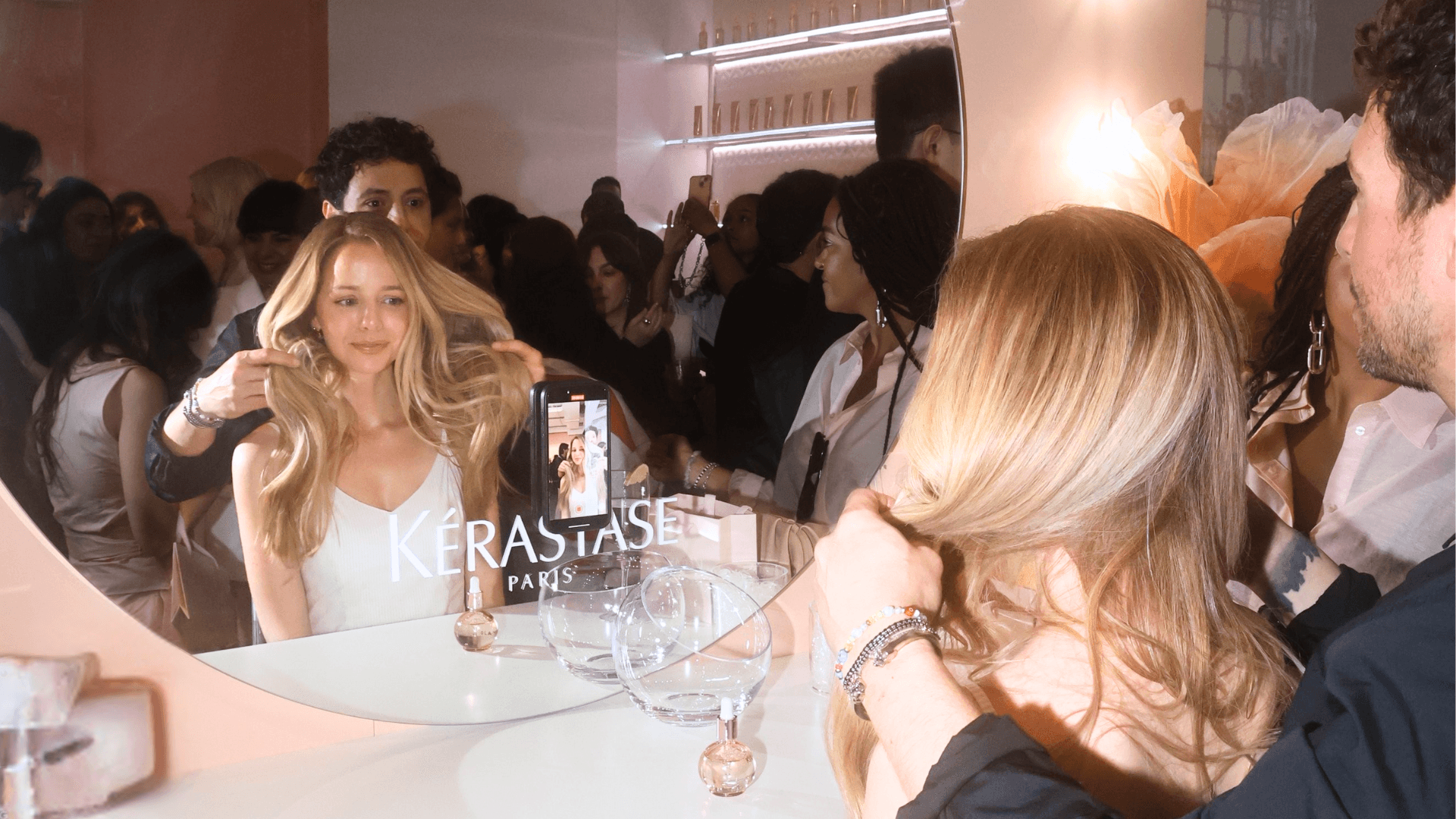
The Evolution of Word of Mouth
- Anthony Coppers, Founder & Head of Innovation
Experienced by few. Shared by many.
Word of mouth has always been the most powerful form of marketing. Not because it’s loud, but because it’s trusted. It moves through people first, even when it’s carried and accelerated by platforms. It’s shaped by experience, emotion, and memory.
What’s changed isn’t the instinct to share. It’s the scale.
For most of history, word of mouth was local. A product was discovered by a few, talked about among friends, and slowly earned its reputation. The impact was intimate, but limited by proximity.
Today, that intimacy hasn’t disappeared. It’s multiplied.
Word of Mouth, Now
Modern word of mouth doesn’t travel in straight lines. It moves through networks, communities, and individuals people choose to listen to, not because they have reach, but because they have relevance.
Influence, in this context, isn’t about amplification. It’s about interpretation.
The creators who matter most don’t repeat brand messages verbatim. They translate them. They take a product or an experience and express it in a way that feels natural to their audience, shaped by shared language, values, humor, and cultural reference points. Two people can experience the same moment and tell entirely different stories, and both can be true.
That isn’t fragmentation. It’s how meaning travels.
Holding the Center
As messages move faster and farther, the brands that endure aren’t the ones trying to manage every outcome. They’re the ones anchored by a clear center.
A strong foundation; what the brand stands for, the world it’s building, the feeling it wants to leave behind, allows interpretation without distortion. When the core is clear, variation becomes an asset rather than a risk.
You see this in brands that have built worlds rather than campaigns. Ralph Lauren has done this for decades, allowing craftsmanship, aspiration, sport, and heritage to coexist without ever losing coherence. Nike has long understood that belief systems scale better than slogans, leaving room for athletes and communities to express the brand through their own lived experience.
You also see it in brands like Kiehl’s, a brand Gradient has partnered with across numerous projects; from permanent retail environments to pop-up activations, where community, consistency, and lived experience shape how the brand is understood. Rather than over-directing the message, Kiehl’s creates spaces that invite participation, allowing people to encounter the brand on their own terms and reflect it back in ways that feel personal and real.
In each case, the brand didn’t disappear. It held its shape.
Where Experience Begins
This is where experience becomes the origin point. Word of mouth doesn’t start with content, it starts with memory. When people participate in something real, something they can feel and move through, the story forms naturally. Language comes later.
When experiences are lived in a consistent way, across markets, creators, and audiences, they create shared reference points. Those references turn into stories. Stories turn into signals. And signals travel far beyond the moment itself.
Story-living allows a brand’s message to evolve without losing its meaning. It turns marketing into a conversation rather than a broadcast; one shaped as much by the people participating as by the brand that initiated it.
From Influence to Advocacy
At its most effective, influence becomes advocacy. Not because someone was told what to say, but because they recognized themselves in the experience. Because it fit naturally into how they already speak to their community.
That’s also how brands find their people.
Not by targeting them precisely, but by creating something clear enough, human enough, and open enough that the right people choose to carry it forward.
In a world saturated with messages, word of mouth still wins; not because it’s louder, but because it’s lived.